The Government Had Ten Years. MILLI Had Three Minutes.

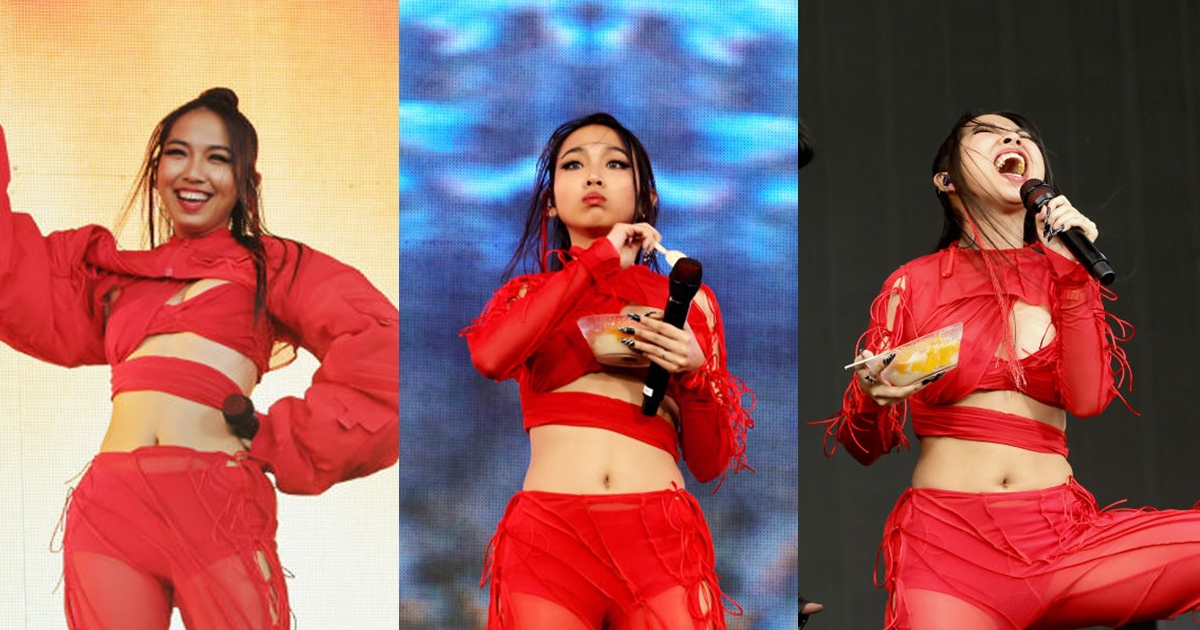
On the night of 17 April 2022, a 19-year-old rapper named Danupha Khanatheerakul walked onto the Coachella Valley Music and Arts Festival stage in Indio, California. She was performing under her stage name MILLI, and she was the first Thai solo artist ever to perform at the festival.
She brought a container of mango sticky rice.
She ate it on stage. She rapped in Thai. She made eye contact with an audience that had, for the most part, never heard of her. And then something happened that no music publicist could have planned: the internet noticed.
What Actually Happened
The clip of MILLI eating khao niew mamuang at Coachella spread through social media over approximately 48 hours. The song she performed, "Mango Sticky Rice," had been released in 2021 and directly addressed Thai cultural pride, the way Thai food is simultaneously beloved globally and often stripped of its context and origin. Eating the dish on the world's most prominent festival stage was not incidental. It was the point.
Within two days of the performance, searches for mango sticky rice in the United States increased sharply according to Google Trends data. Thai food vendors in Los Angeles reported a noticeable spike in orders for the dish. The Tourism Authority of Thailand cited the performance as a significant moment for Thai soft power. MILLI's Spotify streams increased by several hundred percent in the days following the performance.
None of this was the result of a tourism campaign, a government initiative, or a brand partnership. A 19-year-old from Bangkok ate a snack on stage and shifted a conversation.
MILLI: Who She Is
Danupha Khanatheerakul was born in 2002 and grew up in Bangkok. She auditioned for the Thai reality competition show The Rapper in 2018 and reached the finals at the age of 16. Her early music drew comparisons to American artists working in trap and R&B, but she quickly developed a more distinctive voice that wove Thai language, food references, family, mental health, and class consciousness together in ways that felt genuinely personal rather than performed.
Her lyrics in Thai are considered sophisticated by her peers and critics: she plays with tones, uses street-level Bangkok slang, and references Thai cultural touchpoints that her international listeners do not fully parse, a decision that reads as deliberate. The music is not translated for a foreign audience. The foreign audience is invited to meet it where it is.
She has spoken publicly about anxiety and about the pressure of being positioned as a symbol of Thai cultural export at an age when most people are finishing high school.
The Soft Power Conversation
The MILLI moment landed in the middle of a conversation Thailand's government and cultural institutions had been having, with varying levels of coherence, about Thai soft power for several years.
The term entered Thai policy discussions substantially through the lens of South Korean success with K-pop and K-dramas. If South Korea could use culture to drive tourism, food exports, and international goodwill, the argument went, why couldn't Thailand do the same with its own extraordinary cultural resources?
The answer, as the MILLI moment illustrated, is that soft power does not work when it is manufactured. The Thai government did not send MILLI to Coachella to eat mango sticky rice. She went because she was booked, and she made the choice she made because it was true to who she is. The authenticity was the mechanism.
Thai food, Muay Thai, Thai film, and Bangkok's urban culture all carry genuine international appeal. That appeal is strongest when it comes from actual people making actual choices, rather than from tourism authority graphics.
What Followed
After Coachella, MILLI continued recording and performing. Her 2023 album maintained the musical style and linguistic approach of her earlier work. She became a reference point in media and academic discussions about Southeast Asian soft power and the global reach of music from non-Anglophone countries.
She has, by her own accounts, complicated feelings about the symbolic weight placed on that performance. At 19, eating a snack, she became a data point in a national conversation about cultural identity. The song remains one of the most globally recognised Thai-language rap tracks ever released.
The mango sticky rice vendors near MBK and along Sukhumvit still sell out most days. They probably would have anyway.

Show Me The Money 12: The Next Chapter
If Coachella 2022 was the moment MILLI announced herself internationally, her appearance on Show Me The Money 12 in early 2026 confirmed that she is not a one-moment artist.
Show Me The Money (SMTM) is South Korea's flagship rap competition, airing on Mnet since 2012. Season 12 premiered on 15 January 2026 after a three-year hiatus and drew approximately 36,000 applicants, the highest number in the show's history. For the first time, the competition was opened to international contestants, with participants representing 32 countries or regions. The producer teams for this season were Zico and Crush, Gray and Loco, J-Tong and Hukky Shibaseki, and Lil Moshpit and Jay Park.
MILLI auditioned in the global preliminary round in November 2025 and appeared on the broadcast in the show's first week alongside Jay Park. She opened with singing before dropping into a freestyle, passed the audition round, and became the only non-Korean contestant to join a Producer Team in the show's history, ending up on Jay Park's team, Lil Moshpit and Jay Park.
The significance of this was not lost on Korean media or the Thai audience watching. SMTM carries enormous cultural weight in South Korean hip-hop. It has launched careers, rehabilitated reputations, and created the dominant narrative around who matters in Korean rap in any given year. MILLI's presence as a Thai artist competing in Thai and English, on Korean terms, in a Korean format, represented something genuinely new.
The SMTM12 production team noted in press that language had been a concern before auditions began, given how dependent rap is on lyrical nuance. They reported that stage presence and energy resolved those concerns quickly once auditions were underway. MILLI's audition drew significant attention in both Thailand and South Korea.
The Broader Shift
What the MILLI moment represented, more than any single chart position or tourism statistic, was evidence that Thai popular culture had developed a confidence in its own distinctiveness. The move, in earlier decades, was to make Thai pop music sound as international (read: Western) as possible, to minimise the markers of Thai origin. The new generation has largely reversed this.
Thai language, Thai food, Thai sounds, Thai references: these are not limitations to work around. They are the thing.
MILLI did not invent this shift. But she made it visible to an audience of hundreds of thousands of people in the California desert, and then to millions more who watched the clip at home.