Thai Street Art: The Bangkok Neighbourhoods Where Walls Tell Stories
Bangkok is not a city that keeps its art indoors. Walk the right streets and you will find murals that span entire building facades, stencilled portraits layered over crumbling plaster, and hand-painted signage that doubles as social commentary. The city has a street art culture that most visitors miss entirely because they are looking at the wrong walls, in the wrong neighbourhoods, at the wrong pace.
This guide covers the three Bangkok areas where street art is most concentrated, most interesting, and most worth your time.
Talad Noi: The Oldest Neighbourhood, The Most Photographed Walls
Talad Noi sits between Yaowarat Road and the Chao Phraya River. It is one of Bangkok's oldest commercial districts, settled by Teochew Chinese merchants in the nineteenth century. The buildings are narrow and weathered. The alleyways smell of machine oil and incense. It is not a neighbourhood that was designed to be photographed, which is precisely why it photographs so well.
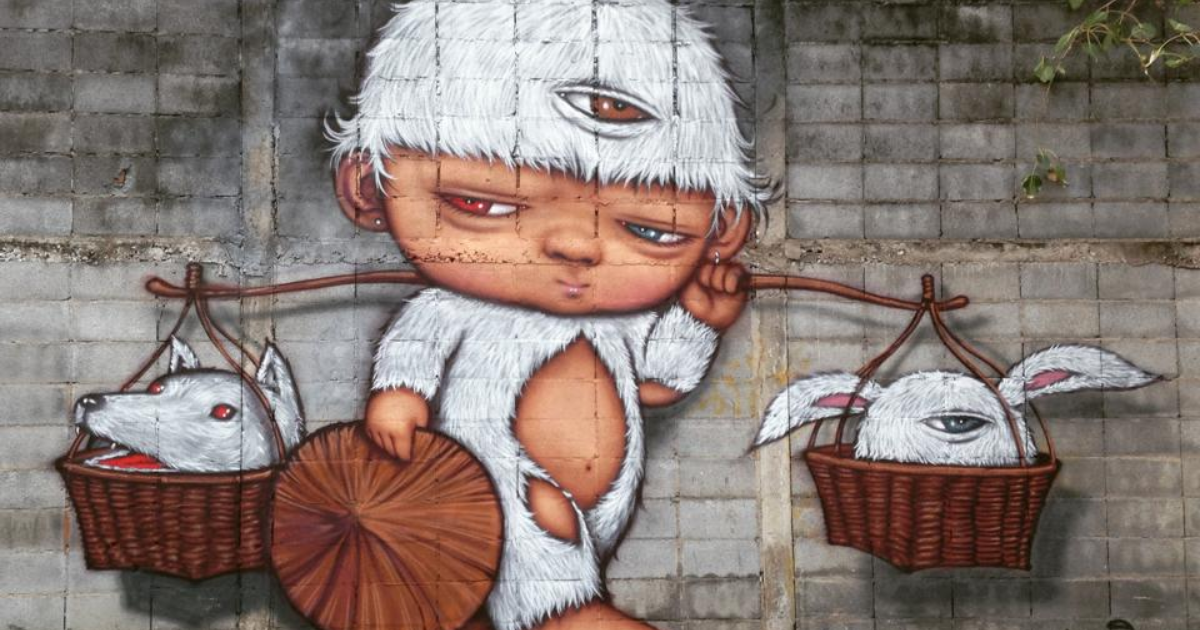
The street art here arrived organically, not through municipal art programs. Local and international artists began using the area's textured walls around 2014 to 2015, and the work has accumulated and layered ever since. The murals range from large-format portraits by Thai artist Alex Face, whose recurring character is a three-eyed girl called Mardi, to smaller pieces tucked into corners that you only find if you are not looking at your phone.
Alex Face's work in Talad Noi is among the most reproduced street art images in Bangkok. The character Mardi first appeared around 2012 and has become one of the most recognisable symbols of Bangkok's contemporary urban art scene. Finding an original unrestored Mardi in Talad Noi takes some walking.
The best approach: enter the neighbourhood from the Talad Noi pier on the Chao Phraya Express Boat, walk inland, and allow yourself to get lost. The area is compact enough that you will not lose yourself for long, but generous enough to reward slow exploration. Go in the morning when the light is soft and the streets are still quiet.
Bang Rak: The River District's Creative Layer
Bang Rak, the district running along the river south of Silom, has become Bangkok's most self-conscious creative neighbourhood over the past decade. The area around Charoen Krung Road has accumulated design studios, independent galleries, boutique hotels, and the TCDC (Thailand Creative and Design Center), which relocated to the area in 2017.
The street art in Bang Rak reflects this design-forward character. Many of the pieces here are commissioned, executed with more graphic precision than the organic layers of Talad Noi. The Charoen Krung stretch between the CAT Telecom building and the Mandarin Oriental produces good finds, as do the sois branching east toward Silom.
The annual Bangkok Design Week, held in January and February, uses Bang Rak as one of its primary zones and typically adds new murals and installations that stay up long after the event ends. The 2025 edition left several large-format pieces on the exterior walls of buildings near the Baan Chao Phraya cluster that are worth finding.
Worth noting: Bang Rak's street art scene sometimes tips toward the corporate-commissioned, where a financial institution has paid for something intended to look organic. The work is still technically accomplished. It just carries a different energy to work that appears because an artist needed to put something on a wall.
Chinatown (Yaowarat): Murals, Gold, and Cultural Crossover
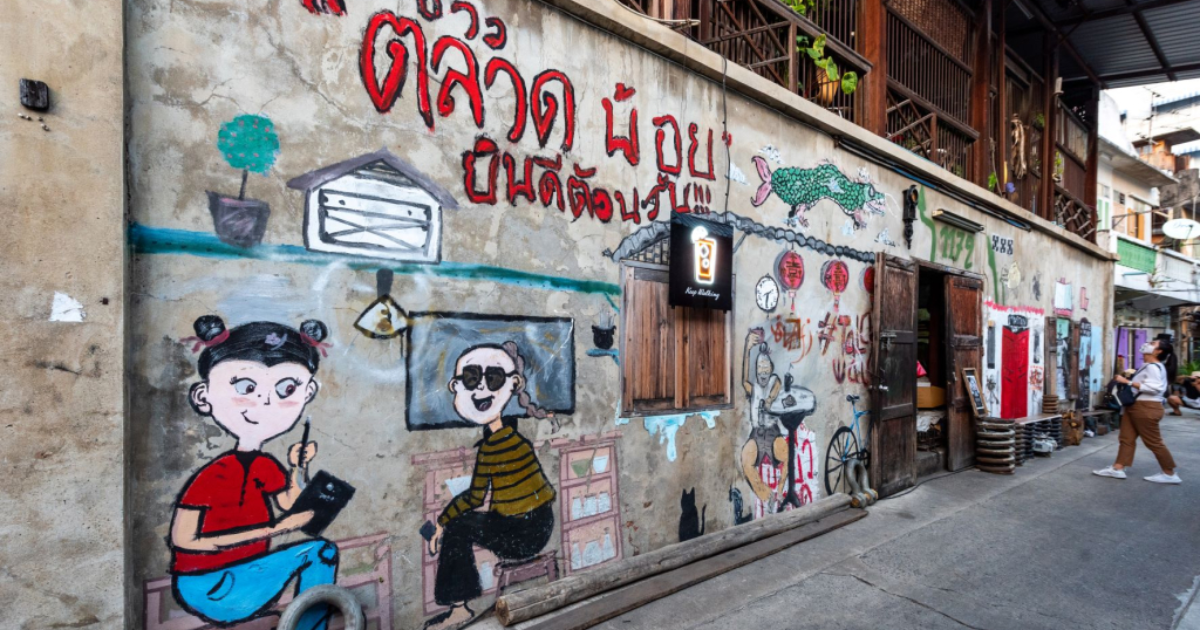
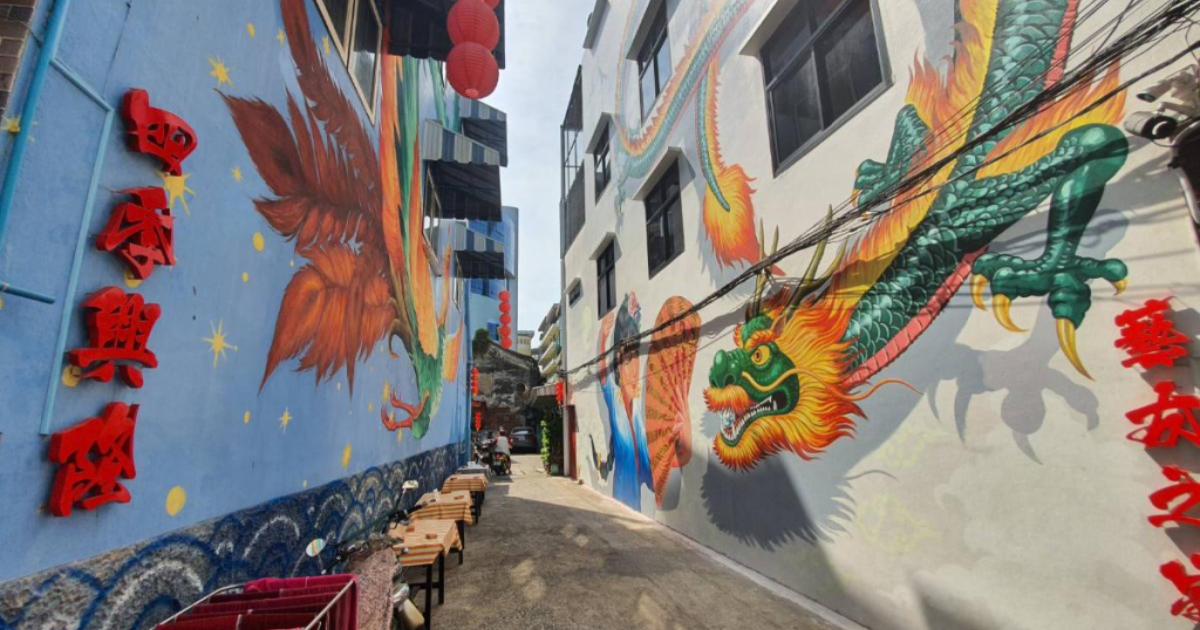
Yaowarat Road is Bangkok's most intense sensory experience: gold shops, seafood vendors, temple incense, and a density of neon signage that makes it feel like two cities occupying the same street. The street art here reflects the neighbourhood's layered identity, Thai and Chinese cultural symbols appearing together in ways that speak to Bangkok's specific history.
The area around Soi Nana (not the Sukhumvit Soi Nana) has developed a small but dedicated creative scene that uses street art as part of its character. This is a different Soi Nana to the one most expats know: it sits in Chinatown near the intersection with Charoen Krung, and it holds a cluster of independent bars, coffee shops, and gallery spaces that have been attracting artists since around 2017.
The murals in this zone frequently incorporate Chinese zodiac imagery, Taoist iconography, and Thai Buddhist symbols within the same composition. They are a visual record of the cultural negotiation that has been happening in this neighbourhood for over 150 years.
How to See It Without Making It Performative
Bangkok's street art is best experienced on foot, without a map, in the early morning or late afternoon. Most of the work sits in working neighbourhoods where residents have lives that do not involve being photographed by tourists looking for content. Move through slowly, be aware of where you are pointing a camera, and treat the experience as research rather than a content-gathering exercise.
None of these areas require a guide. All three are accessible by river ferry or BTS. Talad Noi and Yaowarat are particularly rewarding when combined into a single half-day walk.
The Thaitan covers Thai culture with the depth it deserves. For more on Bangkok's creative scene, read our guide to the contemporary art galleries shaping Thai creative culture.