Sak Yant Explained: Thailand's Sacred Tattoo Tradition (And Where to Get One Legitimately)
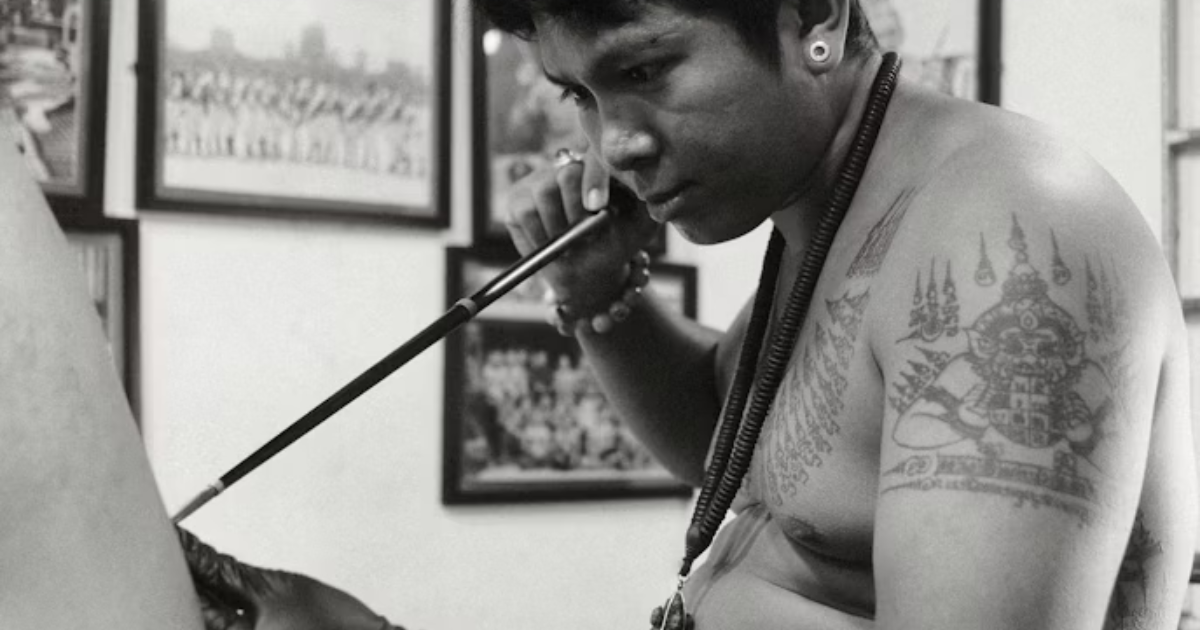
There is a moment at Wat Bang Phra, about fifty kilometres west of Bangkok, that is difficult to describe from the outside. You are sitting cross-legged on the floor of a dim hall. The air carries incense and something older underneath it. A monk leans forward with a metal rod the length of his forearm and begins tapping. When he finishes, he chants over your skin. You bow three times. You walk out into the sun carrying something on your back that you will carry for the rest of your life.
That is a Sak Yant. Not a tattoo with a story. A sacred mark with a specific spiritual intent, administered by someone who has trained for years in both technique and the magical knowledge behind it. The difference between that and a tattoo shop copying the design from Google Images is the difference the two experiences actually are: total.
What Sak Yant Actually Is
The word sak means "to tap" or "to tattoo," and yant derives from yantra, a Sanskrit word for a sacred geometric design. Each Sak Yant combines specific geometric patterns, Khom script (an ancient form of Khmer lettering), and Khata, which are mantras or prayers believed to carry real spiritual force. The writing is not decorative. It functions the way a prayer functions to the person praying.
The tradition extends well beyond skin. The same designs appear on cloth, metal plates, and amulets placed in homes, vehicles, and temples across Thailand. The tattoo is simply the most intimate version of a practice woven through daily Thai life in ways most visitors never notice.
Where It Comes From
Sak Yant is at least two thousand years old and predates formal Buddhism in the region. Its roots lie in animistic practices common across mainland Southeast Asia, practices that gradually absorbed Buddhist, Hindu, and Brahminic elements as those traditions spread through the Mekong world. Both Thailand and Cambodia claim it. The Khom script used in most designs is derived from ancient Khmer, which gives Cambodia a historically strong case. Thai practitioners often dispute this, and there is no clean resolution. The tradition predates every national border now claiming it.
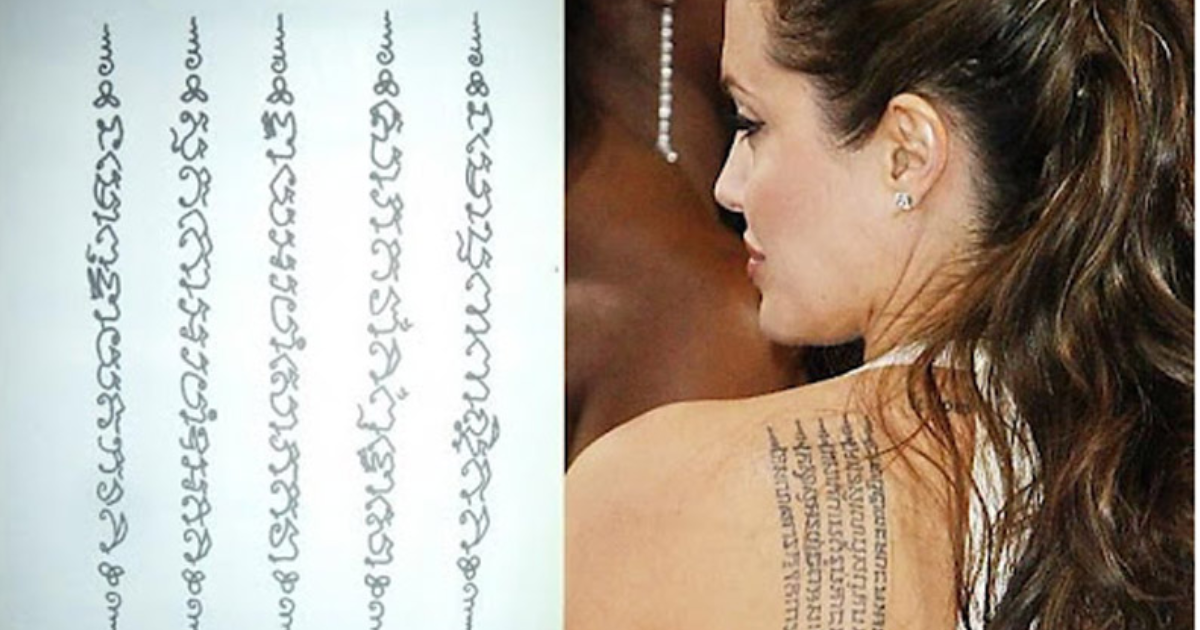
Historically, Sak Yant was associated with soldiers and fighters who believed the markings would protect them in combat. That connection to Muay Thai, the military, and the police force remains strong today. The modern visibility of Sak Yant to the outside world largely came through those communities, and through one particularly well-timed tattoo on a particular American actress at Wat Bang Phra in 2003.
The Three Designs Most Foreigners Receive
There are thousands of Sak Yant designs. For a first recipient, practitioners typically direct people toward one of three foundational options.
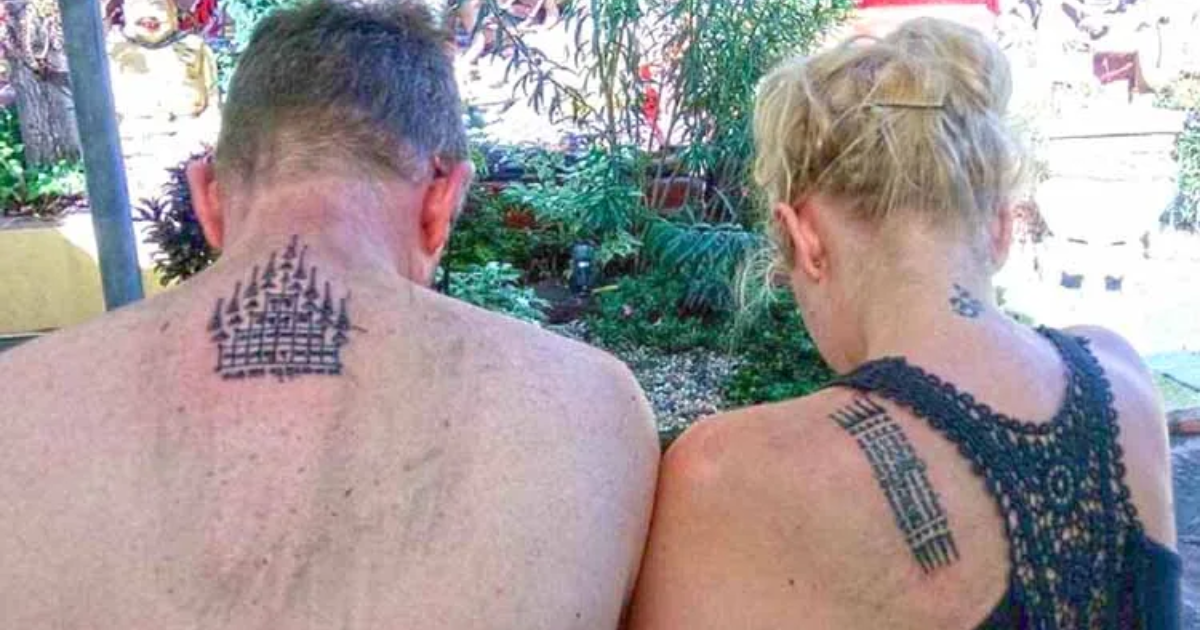
The Hah Taew, or Five Lines, sits on the upper left shoulder. Its five rows each carry a distinct blessing: protection from unjust accusation, reversal of bad fortune, protection from curses and black magic, enhancement of luck and prosperity, and the charisma that draws people toward you.
The Gao Yord, or Nine Spires, represents the nine peaks of Mount Meru, the sacred mountain of Buddhist cosmology. It is widely considered the most sacred of the three, believed to contain and govern all other Yants, and is typically placed at the top centre of the back.
The Paed Tidt, or Eight Directions, features eight mantras written in concentric circles with representations of the Buddha facing outward in every direction. It is understood as protection regardless of which way you travel, and suits people whose lives move in unpredictable directions.
Note on placement: A Sak Yant should never be placed below the waist. The head is the most sacred part of the body in Thai culture; the feet are the lowest. The same logic that means you remove your shoes at a temple entrance applies here.
Monk or Ajarn: The Real Distinction
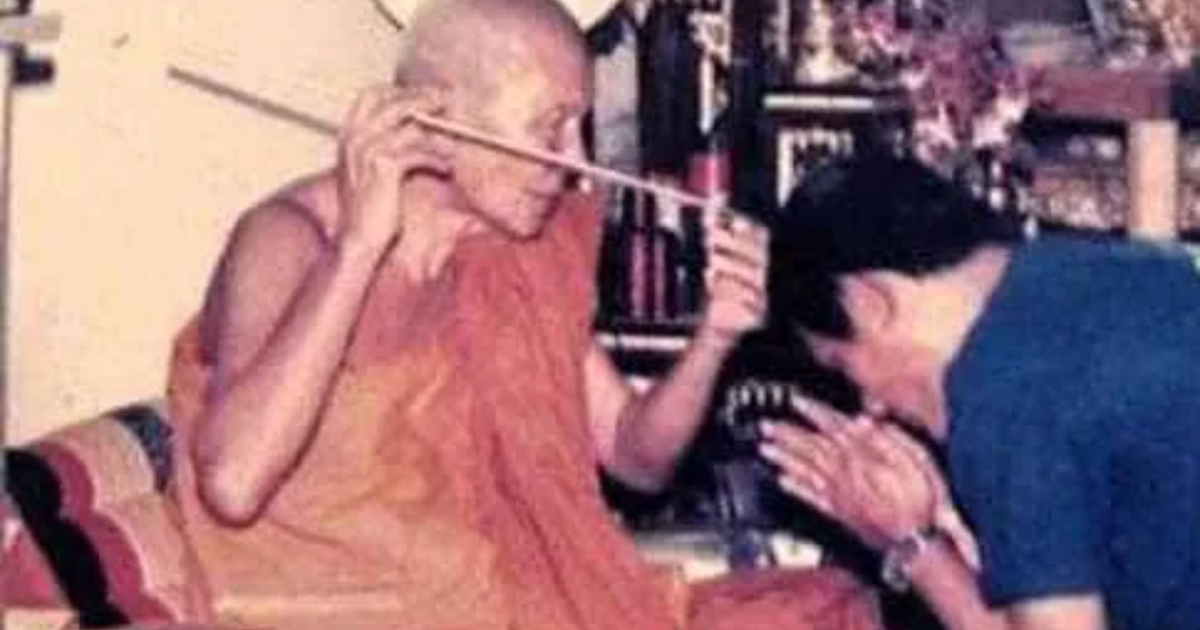
There are two legitimate sources for a Sak Yant. The first is a Buddhist monk at a temple where the practice is maintained. The second is an Ajarn, meaning "teacher" or "master," a layperson who has undergone years of training under a recognised master lineage.
At a temple, the experience is unmediated. You bring offerings of flowers, incense, and cigarettes. You sit on the floor and wait, sometimes for hours. The ceremony is conducted in Pali. The monk chooses your design. The donation is at your discretion. Women should be aware that many monks decline to physically tattoo female recipients due to monastic conduct rules, offering a sacred cloth Yant as an alternative.
An Ajarn at a dedicated samnak, a ceremonial studio space, involves more consultation. You discuss your circumstances. The Ajarn explains the design and the conduct attached to it. Fees run from roughly 2,000 baht for a simple design upward, depending on complexity. The spiritual legitimacy is equivalent to the temple experience, provided the Ajarn has genuine lineage from a recognised master.
Wat Bang Phra: The Temple Worth the Journey
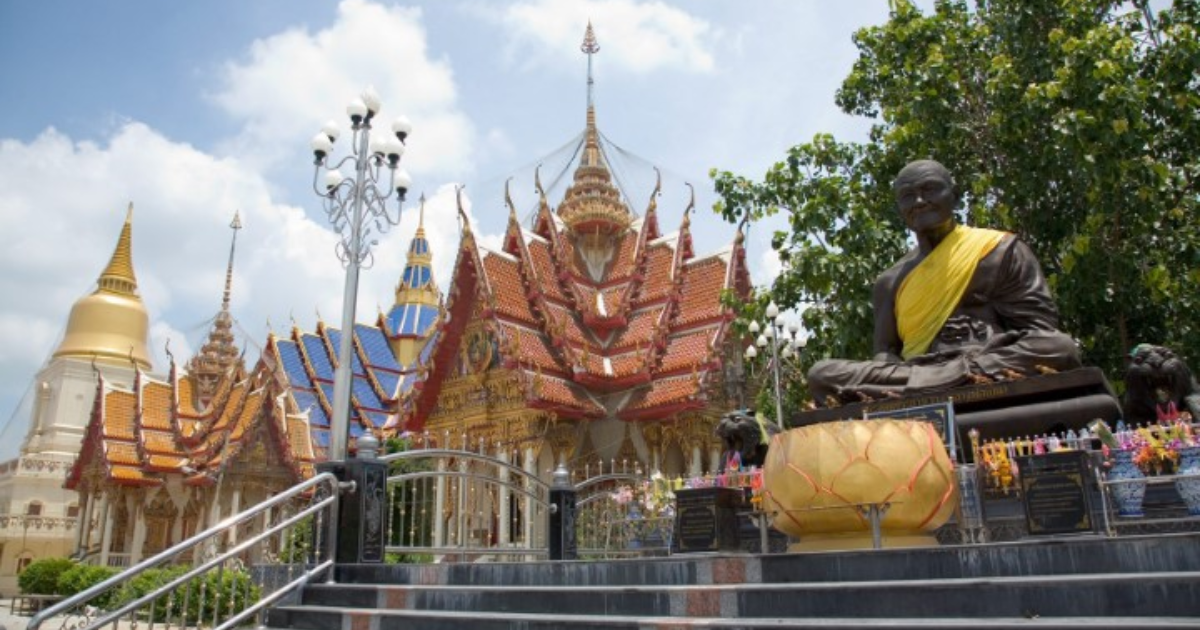
Wat Bang Phra in Nakhon Pathom Province is the most spiritually significant site for Sak Yant in Thailand. The temple's fame in this tradition came through Luang Phor Phern, the late abbot who passed in 2002 and whose mummified body is now displayed in a shrine room on the grounds. His reputation rested on decades of practice and a widely-told story from the 1950s, in which villagers reported that no one who received his protective markings was subsequently attacked by the wild tigers then threatening the area.
The temple still offers Sak Yant daily. Arrive before 8am. The queue grows quickly. Offering materials are available from vendors outside the gates for around 100 to 150 baht. Arrange your return transport in advance. A Grab from central Bangkok takes 60 to 75 minutes and costs roughly 400 to 600 baht one way. Public transport options are limited.
The temple also hosts a Wai Khru ceremony each March, when disciples gather to renew the power of their tattoos. It is one of the most genuinely unusual ceremonial events in the Thai calendar and worth planning around if your timing allows.
The Conduct That Comes With It
The most important thing to understand about a Sak Yant is what happens after you leave. The blessing is not permanent the way ink is permanent. It is maintained through behaviour.
The core precepts map closely to foundational Buddhist ethics: avoid harm to living beings, do not steal, do not lie when it matters, do not commit adultery, do not lose control through intoxication. These are not exotic rules invented for tourists. They are the Five Precepts that practicing Buddhists across Thailand already follow. Additional specific rules vary by temple and master, sometimes restricting certain foods or social situations based on older monastic contexts.
The underlying principle is simpler than the specific rules: only a person living with genuine intention can carry the blessing meaningfully. The Sak Yant is not protection you acquire. It is a relationship you maintain.
The Bamboo Needle Myth
Many tourists arrive specifically seeking what is marketed as an "authentic bamboo tattoo" Sak Yant. This needs correcting. The traditional implement is a khem sak, a long metal rod sharpened to a fine point. The bamboo association is largely a tourism marketing invention.
Many legitimate practitioners now use surgical-grade steel needles for hygiene reasons. This does not diminish the practice. The power of a Sak Yant derives from the sacred geometry, the Khom script, the Khata, and the blessing performed by someone with proper lineage and training. The implement is secondary. The knowledge behind the hand holding it is everything.
Should a Non-Buddhist Get One?
Many non-Buddhists receive Sak Yant and do so respectfully. The tradition has never been exclusive to Buddhist practitioners. Its pre-Buddhist animistic roots mean it has always extended across religious lines.
What is required is not faith in a specific doctrine. What is required is respect for the process and genuine commitment to the conduct it demands. An honest conversation with the Ajarn or monk about your background and intentions is not only acceptable, it is the right way to begin. A practitioner with real training will guide you toward the appropriate design for your actual life.
The Sak Yant tradition has survived more than two thousand years because it carries genuine meaning for the people who receive it properly. That meaning is available to a respectful outsider. The obligation it creates is the same for everyone.
Related reading: Muay Thai: A Cultural Deep-Dive Beyond the Tourist Gym