Muay Thai: A Cultural Deep-Dive Beyond the Tourist Gym
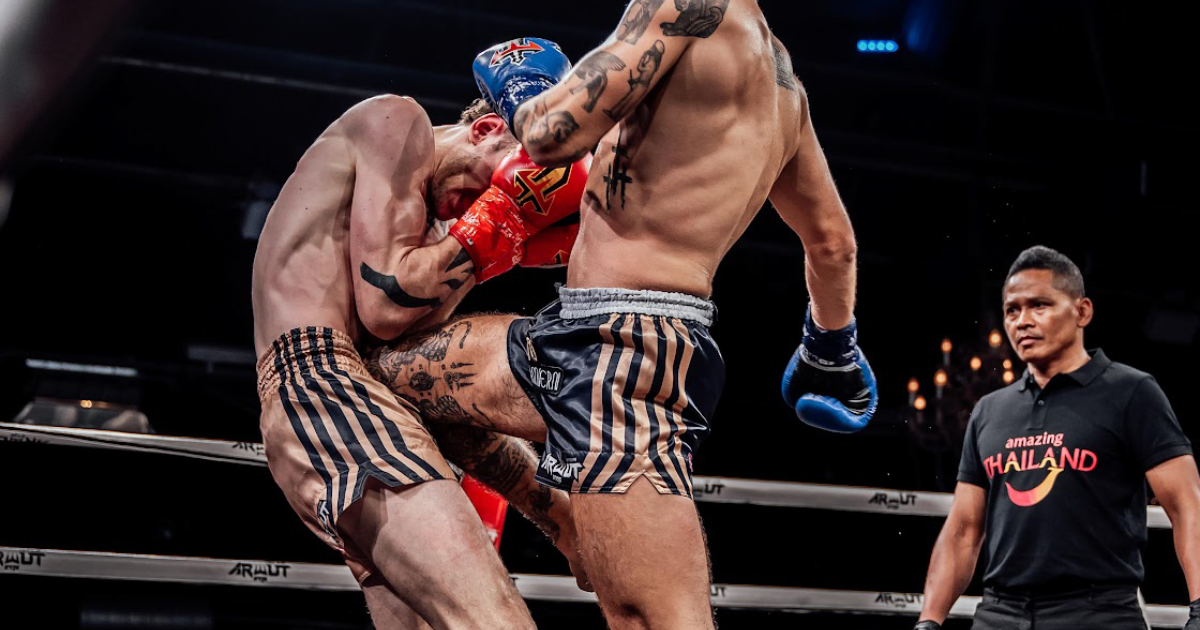
Every Tuesday and Friday night at Lumpinee Boxing Stadium on Ram Inthra Road, something happens that most tourists in Bangkok will never see. Not because it is hidden. Because they are busy watching a different version of it.
The version they are watching is in a ring somewhere near Patpong or Khao San Road, cost them 1,500 baht to enter, and is performed largely for their benefit. The fighters are skilled. The experience is real enough. But it is the outline of something, not the thing itself.
The thing itself is a fighter circling the ring counter-clockwise before a bout begins, touching each corner post with a prayer. It is the slow wail of the pi chawa, a quadruple-reed woodwind instrument, building from something ceremonial into something electric. It is the Mongkol, a sacred headband blessed by a monk or senior trainer, being placed on a fighter's head with a murmured prayer before the first round. It is, if you watch it from the right seats at the right stadium, the clearest window into Thai culture you will find anywhere in the country.
That is what this piece is about. Not the sport. The meaning.
What Muay Thai Actually Is
Muay Thai is the national sport and martial art of Thailand, and it is referred to as the Art of Eight Limbs for a specific reason: fighters use eight points of contact. Fists, elbows, knees, and shins. The body becomes, in the sport's own metaphor, a living weapons system: hands as swords, elbows as maces, shins and forearms as armour, legs as axes.
This is not a modern sports marketing line. It reflects the art's origins. Muay Thai descended from Muay Boran, the ancient unarmed combat system used by Siamese soldiers when weapons failed. In the early kingdoms of Sukhothai, established in the 13th century, soldiers were trained in both Krabi Krabong, the armed combat form using swords and polearms, and the bare-hand system that would eventually develop into what we know today. The two disciplines were considered complementary, not separate.
Much of the written history of Muay Thai was lost during the 14th century when Burmese forces ransacked Ayutthaya, the Siamese capital. The records that survived are now held as national treasures. This destruction is part of why the early history is contested by scholars and why the art carries a particular emotional weight for Thai people: it is not just a sport, it is evidence of cultural survival.
From Battlefield to Festival to Stadium
The Ayutthaya period, which ran from 1350 to 1767, was when Muay Thai began its transformation from a purely military discipline into something closer to cultural expression. Villages started organising Muay Boran contests during local festivals. The matches became events, complete with traditional music setting the rhythm. Fighters from different villages competed, and in doing so, carried the pride of their communities into the ring.
This social dimension matters. It explains something that newcomers to Thai culture often notice and struggle to place: the way Muay Thai connects to ideas of respect, community, and hierarchy in ways that have nothing to do with punching someone in the head.
By the Rattanakosin era, beginning in 1782, the art had shifted decisively from military necessity to national sport. King Rama I, himself trained in Muay Thai from a young age, actively supported the contests. The sport was incorporated into schools and state ceremonies. Rajadamnern Stadium opened in 1945, built on orders from Prime Minister Field Marshal Plaek Phibunsongkhram, and it became the permanent stage the sport had earned. Lumpinee Boxing Stadium followed in December 1956, run by the Royal Thai Army. These two venues remain the twin centres of Muay Thai's institutional identity.
The Ritual Before the Fight
Before a single strike is thrown in a serious Muay Thai bout, something takes place that most foreign audiences either observe with curiosity or simply overlook as pre-match ceremony. It is neither.
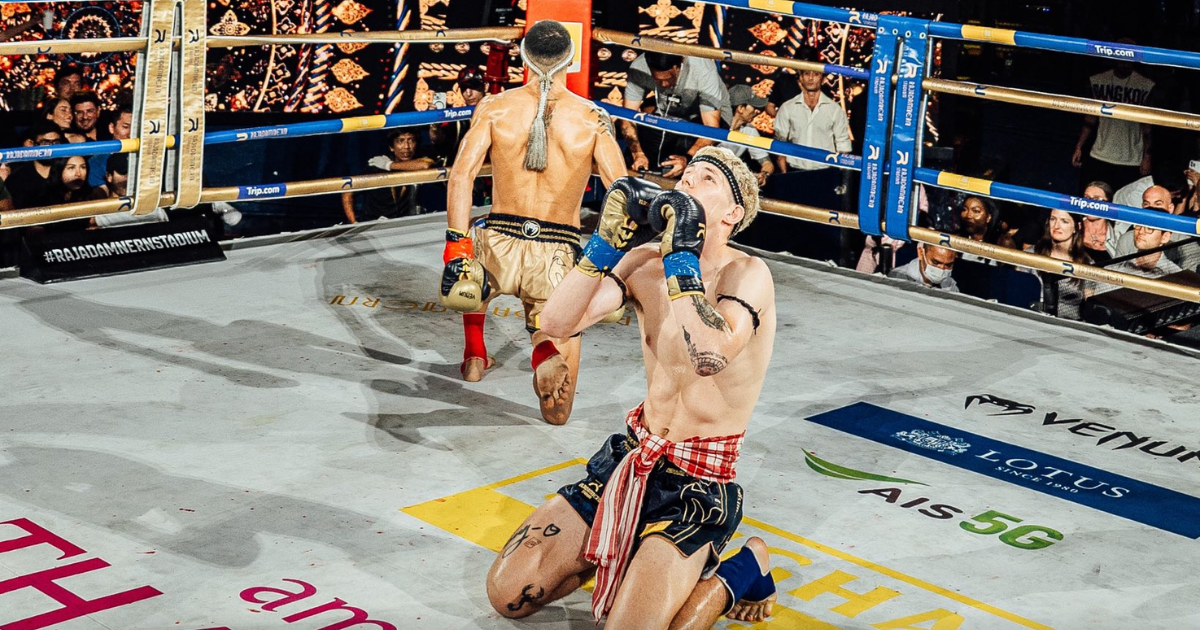
The Wai Kru Ram Muay, to use its full name, is a practice that exists throughout Thai culture, from traditional music to Khon dance to martial arts. The term translates roughly as "war dance saluting the teacher." Wai is the traditional Thai gesture of respect, palms pressed together. Kru derives from the Sanskrit word for teacher or guru. Ram is the Thai word for classical dance. Muay means boxing.
The ritual has two parts. The Wai Kru is the act of paying respect, where a fighter kneels in the ring and bows, honoring not just their immediate trainer but the lineage of teachers extending back through the generations. The Ram Muay is the choreographed dance that follows, which is uniquely personal to each fighter's gym and region of origin. Watch it closely enough and you can often identify where a fighter trained from the specific movements they perform.
Before the Ram Muay begins, the fighter wears two sacred objects. The Mongkol is a ceremonial headband, typically blessed by a monk or respected teacher, worn during the ritual and removed before the fight begins. Ancient Thai warriors are said to have written protective prayers on strips of cloth and worn them into battle; the Mongkol carries that lineage. The Pra Jiad are armbands tied just above the biceps. Historically, warriors tore fabric from their mothers' clothing to wear in battle as a blessing. Today the armbands still carry that symbolism of connection to home, protection, and courage.
The Mongkol, following the Thai cultural principle that the head is the most sacred part of the body, must never be placed on the ground, never dropped, and must be hung above head height when not in use. These are not superstitions in a dismissive sense. They are the grammar of a belief system that runs through Thai culture far beyond Muay Thai.
Everything in the Wai Kru is performed in threes, honoring the Three Jewels of Buddhism: the Buddha, the Dhamma, and the Sangha. Fighters circle the ring in a counter-clockwise direction and touch each corner with a prayer. The relationship between Muay Thai and Thai Buddhism is not incidental. It is structural.
The Music Nobody Explains to You
If you attend a fight night at Rajadamnern, you will hear music. If you have been to a tourist-facing Muay Thai experience, you may not have noticed whether there was music at all, or it may have been piped through speakers. At a serious stadium event, it is performed live by a four-piece ensemble.
The Sarama, as this music is called, is not background decoration. It is the emotional architecture of the event.
The ensemble typically consists of the pi chawa, a quadruple-reed woodwind instrument with a piercing, nasal quality that is unlike anything in Western musical tradition; the klong khaek, a pair of drums; and the ching, small bronze finger cymbals that maintain the rhythm. The pi chawa player leads the ensemble, and the Sarama is improvised, not scripted. It responds to what is happening in the ring.
During the Ram Muay, the music is slow and ceremonial. Once the fight begins, the tempo shifts. As rounds progress and intensity builds, the Sarama builds with it. In a five-round Thai stadium bout, the music in round five can be frantic. Veteran Muay Thai observers note that fighters, especially those trained in traditional camps, genuinely respond to the music, their pacing and rhythm influenced by the band in ways that have no direct equivalent in Western combat sports.
The pi chawa player uses a technique of circular breathing to maintain a continuous, unbroken tone throughout the performance. You have never heard anything quite like it in a live sports setting. It is strange and then, after a few minutes, completely inevitable.
What the Tourist Gym Misses
There are hundreds of gyms in Bangkok offering Muay Thai training. Many of them are genuinely excellent. Some are oriented toward fitness tourists, gap-year travelers, and expats wanting a challenging workout. There is nothing wrong with any of this. But it is worth being clear about what that version of Muay Thai is and is not.
A serious Thai fighter starts young, often in their early teens, and trains within a system that involves the kru, the senior trainer, as a relationship of genuine moral significance. The student is not just learning techniques. They are entering a lineage. The Wai Kru ceremony acknowledges this explicitly: you are honoring everyone who trained your trainer, and their trainers before them, going back further than you can trace.
The camps that have produced champions operate under conditions that would surprise most Western visitors. Training is often twice daily. The diet is disciplined. There is no distinction between the gym as fitness facility and the gym as community: you live it, not visit it.
Regional styles developed over centuries, and the differences are meaningful. Muay Korat, from the northeast, is known for powerful punches and what is sometimes called the buffalo swing. Muay Tha Sao from the north is characterised by speed and agility over power. Muay Lopburi from the central plains emphasises technical precision and strategic patience. These are not marketing categories. They reflect different physical and cultural environments, the same way regional Thai cuisine reflects the particular land and history of each area.
The Social Dimension Nobody Talks About
For many Thai families, Muay Thai is not a leisure activity or a cultural pastime. It is an economic one.
Young men from rural communities, particularly from the northeast of Thailand, have historically entered the sport as a path toward financial stability. A fighter who reaches the Lumpinee or Rajadamnern championships earns money that transforms his family's circumstances. This is a reality that Thai sports writers understand as central to the sport's social function. It is something that gets almost entirely lost in Western coverage, which tends to frame Muay Thai as either brutal entertainment or exotic tradition.
The relationship between fighter and kru within this context is not just spiritual or technical. It is often one of genuine dependency and obligation: the kru invests time and resources in a young fighter, the fighter's success is the kru's reputation, and the financial returns are often shared. Kreng jai, that deep reluctance to impose, combined with bunkhun, the deeply held Thai concept of gratitude for those who have helped you, shapes these relationships in ways that are not reducible to a simple coach-athlete dynamic.
When a fighter performs the Wai Kru before a bout, they are acknowledging all of this. The gesture toward the trainer's corner, the three bows, the circling of the ring: these are the visible expression of an entire system of obligation and respect.
Where to Watch the Real Thing
There are two stadiums in Bangkok that matter if you want to understand what Muay Thai is, rather than what it has been packaged to look like.
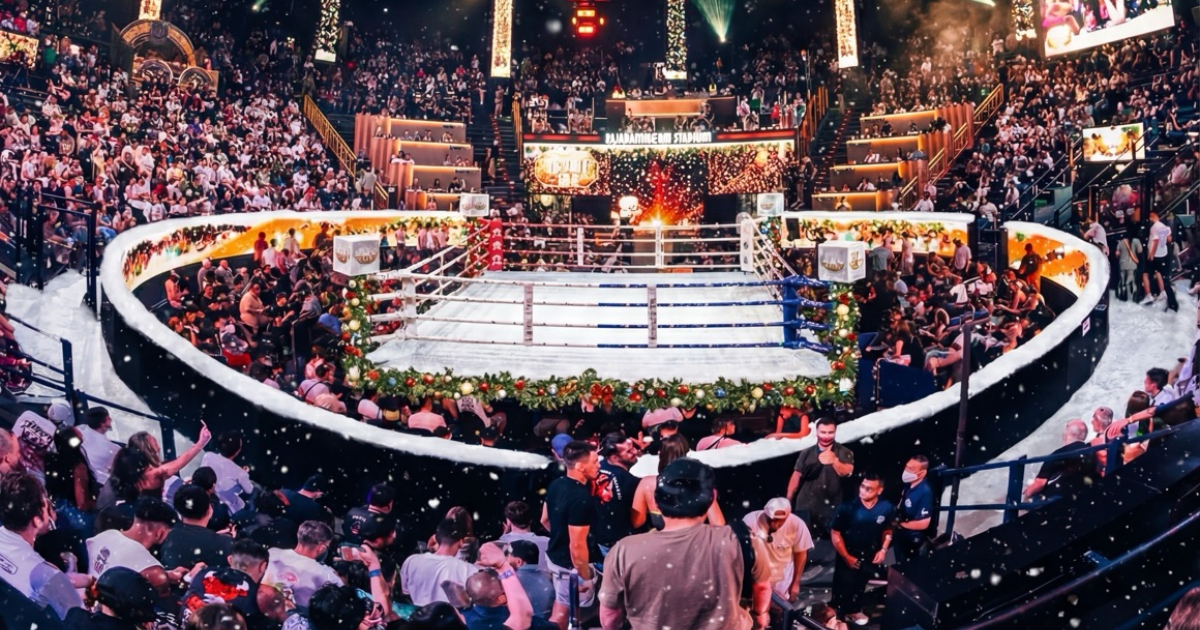
Rajadamnern Stadium sits on Ratchadamnoen Avenue and opened its doors in December 1945. It is the older of the two major venues, capable of seating several thousand spectators, and the atmosphere in the upper tiers when the crowd is invested in a close fight is unlike anything you will experience at a tourist-oriented event. Rajadamnern introduced the first ranking system and championship belt in Thai boxing. Fights run throughout the week, and the upper-level seating gives you both a view of the action and a view of the crowd, which is half the experience.
Lumpinee Boxing Stadium on Ram Inthra Road opened in December 1956 and is run by the Royal Thai Army. The original Lumpinee, near Lumphini Park, was a building with worn wooden floors and slatted windows that people who trained and watched there still speak about with something close to grief. It relocated to its current site in February 2014. Fights run on Tuesdays, Fridays, and Saturdays, typically starting around 18:00.
Both venues have their own ranking systems and title belts, which are taken seriously within the sport. Winning a Lumpinee or Rajadamnern championship is not a commercial milestone: it is what fighters mean when they say they have achieved something.
Ticket prices at both stadiums are meaningfully lower than at tourist-facing venues in the centre of Bangkok. The upper tiers at Rajadamnern will cost you somewhere in the region of 1,000 to 2,000 baht depending on the event. Ringside is more expensive and unnecessary for a first visit: you will miss the gamblers in the second-level tiers communicating by hand signals, which is a show in itself.
Get there before the first bout starts. Watch the Ram Muay of the first few fighters and listen to what the Sarama does. Give yourself twenty minutes to adjust to the music and the rhythm of the crowd before the fights absorb your attention.
A Note on Learning It
If you want to train Muay Thai in Bangkok, the options roughly divide into three categories.
There are large, modern facilities catering primarily to foreign students, where the instruction is often very good, the English-language communication is easy, and the experience is designed for people who want to incorporate Muay Thai into a fitness routine or short-term Thailand stay. There is nothing wrong with these.
There are traditional camps, some in Bangkok and more outside it, where Thai fighters train alongside foreign students. These are harder to navigate, less comfortable, and considerably more interesting. The instruction is typically excellent. The cultural immersion is genuine. The kru may not speak much English. This is part of it.
And there are the serious camps: places where the priority is producing fighters, not accommodating tourists, and which will accept committed long-term students who are prepared to train at that level. These require time, not a two-week visa trip.
If your interest is cultural as much as athletic, a week at a traditional camp outside Bangkok, with at minimum two full days at the serious stadiums, will teach you more about Thailand than most other experiences available to visitors.
Why It Still Matters
Thailand has no shortage of things that get preserved for foreign consumption. Muay Thai is different because it has never stopped being something Thais need. The stadiums are not museums. The fighters are not performers in a heritage show. When a young man from a rural province arrives in Bangkok and enters a camp, the system he enters is the same system that produced the champions whose photographs cover the walls, going back decades.
The Wai Kru is still performed because the relationship it acknowledges is still real. The Sarama still plays because the art without the music is something diminished. The Mongkol is still blessed because the belief that sacred objects carry protection has not been replaced by secular rationalism.
Thailand is a country extraordinarily adept at presenting itself in the version it thinks visitors want. Muay Thai, at its serious level, does not do that. It presents itself as it is. Which is why, if you sit in the right seats at the right stadium on the right night, you will feel something shift in your understanding of where you are.
Ready to see it in person? Our guide to watching Muay Thai in Bangkok, including how to reach both stadiums and what a fight night actually involves, is coming soon.