Khon: Thailand's Spectacular Classical Dance Drama Explained
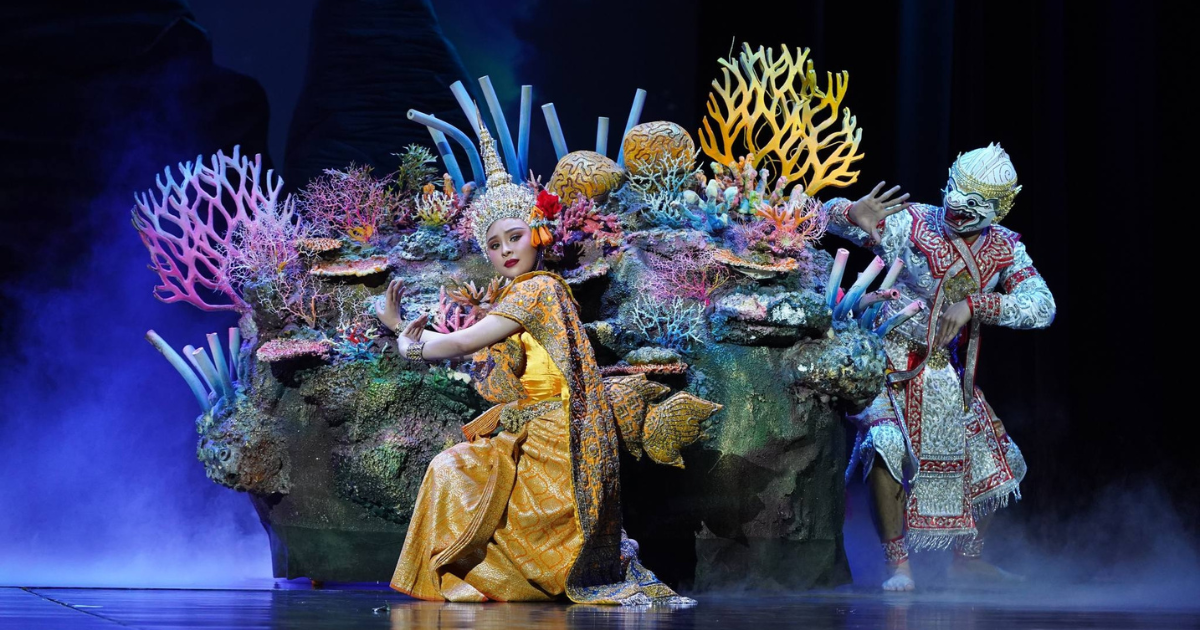
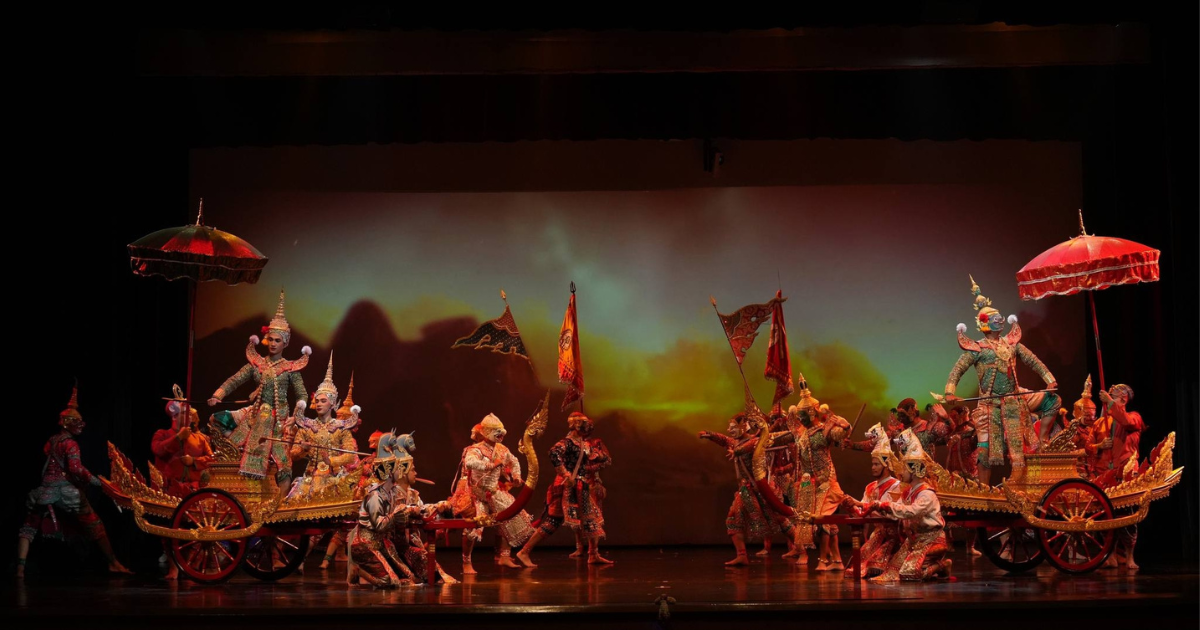
The masks are what you notice first. Faces of green-skinned demons, gilded monkey warriors, and celestial beings with crowns that extend a foot above the dancer's head, all rendered in lacquer, mirror glass, and hand-stitched fabric. Then the music starts: a piphat ensemble of xylophones, oboes, and percussion, and the dancers begin to move with a precision that makes you aware, immediately, that you are watching something that has been refined over centuries.
Khon is Thailand's classical masked dance drama. In 2018, UNESCO inscribed it on the Representative List of the Intangible Cultural Heritage of Humanity. Most foreign visitors to Bangkok have never seen a performance. That is a genuine missed opportunity.
What Khon Is
Khon (โขน) is a form of classical Thai dance performance that narrates episodes from the Ramakien, the Thai adaptation of the Sanskrit Hindu epic Ramayana. The story follows the god-king Phra Ram (Rama), his wife Nang Sida (Sita), and the monkey warrior Hanuman as they battle the demon king Thotsakan (Ravana).
The drama involves four categories of character, each with distinct costume and movement vocabulary. Phra, the refined male heroes, move with controlled grace and downcast eyes. Nang, the female characters, perform with liquid-slow hand gestures. Yak, the demon characters, move with angular aggression and wear elaborate masks. Khon Ling, the monkey army, perform acrobatic sequences in masks depicting various monkey warriors.
What distinguishes Khon from other Thai dance forms is the combination of the masks, the orchestral accompaniment, and the narrators who sing and recite the story while dancers mime the action. Performers do not speak. Every emotion, every plot turn, is communicated through gesture, posture, and the position of the hands.
Its Origins and Royal History
Khon has been documented in the Thai royal court since at least the seventeenth century during the Ayutthaya period (1351 to 1767). Following the destruction of Ayutthaya by Burmese forces in 1767, King Taksin and later the Chakri kings worked to preserve and reconstruct the performance traditions of the old court.
For most of its history, Khon was performed exclusively for royalty and the nobility. The performances could last days, with the full Ramakien running to 138 episodes. The tradition was transmitted through royal patronage: training academies within the royal household taught dancers from childhood, and the right to perform certain characters was a distinction conferred by the king.
In 1934, during the reign of King Prajadhipok (Rama VII), royal support for the classical arts was transferred to state institutions, and Khon training became part of the formal curriculum of the College of Dramatic Arts, which continues to train performers today.
How to Watch a Khon Performance in Bangkok
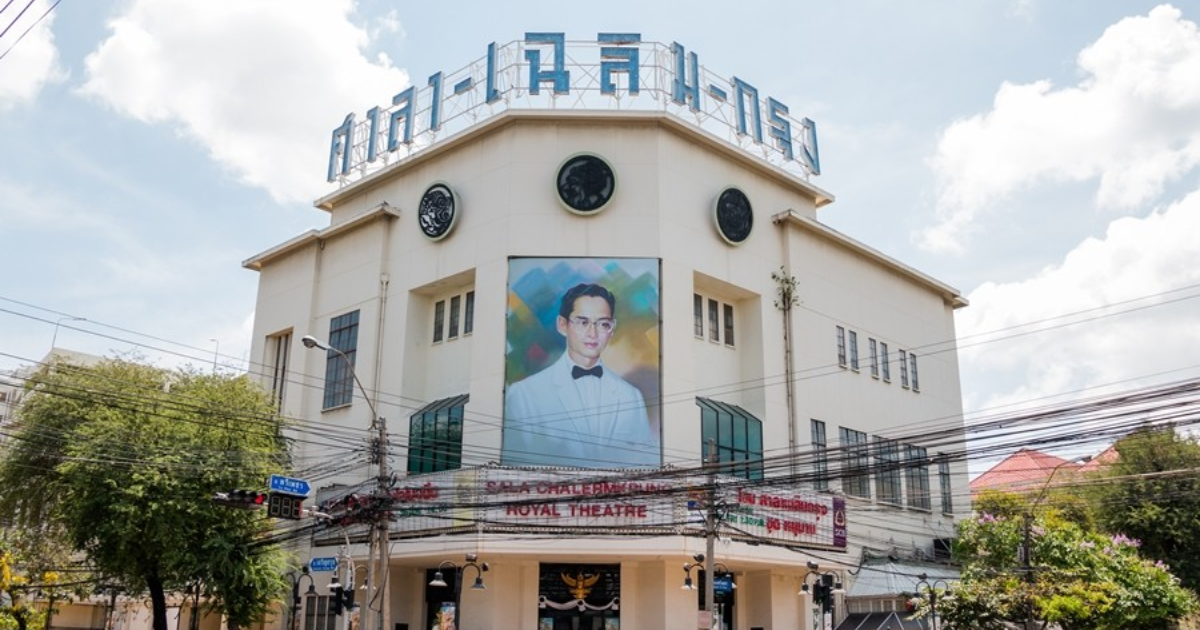
The most accessible Khon performances for visitors and expats are staged at the Sala Chalermkrung Royal Theatre, located on Charoen Krung Road near the Old Town area. The theatre was built in 1933 in Art Deco style at the command of King Prajadhipok and hosts regular Khon performances with English subtitles displayed on small screens beside the stage.
Tickets typically range from 800 to 1,200 baht depending on seat category. Performances run approximately 90 minutes and cover selected episodes from the Ramakien rather than the full epic. The theatre itself is worth visiting independently of the performance: it was one of the first cinema buildings in Thailand and retains its original curved balconies and painted ceiling.
The National Theatre of Thailand, near the Grand Palace on Ratchini Road, also stages Khon performances, though scheduling is less regular and the production values differ from Sala Chalermkrung's more tourist-oriented program.
If you can attend only once, go for an episode that features significant Hanuman scenes. The monkey warrior's acrobatic sequences are technically extraordinary and the audience, including Thai audience members who have seen Khon many times, typically responds with audible appreciation.
The Training: What the Performance Costs the Dancer
A Khon dancer typically begins training between the ages of eight and twelve at the College of Dramatic Arts (Witthayalai Natasin). The curriculum is demanding: students study dance vocabulary, body conditioning, mask-wearing technique, and the narrative of the Ramakien simultaneously. Professional Khon performers have typically trained for a minimum of seven to ten years before appearing in major productions.
The physical requirements are significant. The male demon characters wear masks that cover the entire head and restrict peripheral vision and breathing. Performing extended sequences in full mask and costume, in Bangkok's heat, while maintaining the precise technical requirements of the form, is genuinely difficult.
Why Khon Matters Now
There is an honest tension in Khon's present status. State support has kept the art form alive institutionally, but the organic ecosystem that once sustained it, the royal court, the noble households, the communal knowledge of the Ramakien across all social classes, no longer exists in the same form.
Contemporary choreographers and younger performers are exploring how Khon can evolve. The work of groups like Pichet Klunchun, a choreographer who trained in classical Khon before developing a contemporary practice, demonstrates that the vocabulary of classical Thai dance can be engaged with critically and creatively rather than preserved under glass.
Khon is not a museum piece. It is a live tradition in negotiation with its own survival.
The Thaitan covers Thai cultural traditions with the depth they deserve. For more, read our guides to Muay Thai as cultural practice, Sak Yant sacred tattoos, and the Thai art scene in Bangkok.